Emotional design is
taught as content,
not as a skill

Feel It. Name It. Design with it
01 · UX is a wide field
UX Design
Research
Mobile App
AI Collaboration
Emotional Design
03 · Why It Matters Now
04 · Research Foundation
04 · Design System
TU Delft Emotional Typology - Desmet et al.
02 · The Problem
UX has many directions
Emotional UX is one
And it is essential
AI is doing the execution
The human skill is feeling
Does it connect? Does it mean something? Does it leave the user feeling something intentional?
↑ This is UXatlas
Emotional UX
Usability
Accessibility
Interaction Design
Visual Design
Systems Design
Research
Content Strategy
WHAT THEY KNOW
The frameworks exist
Norman. Desmet. Fogg. The research is deep and well-established. Every designer has read at least some of it.
WHAT THEY CONNOT DO
Practice the skill
There is no space where a designer brings a live problem and works through it using emotional design language in real time.
THE RESULT
Trial and error
"I figured it out by failing."- said by every designer in the research. The gap is structural. Not a lack of resources.
As AI absorbs the technical execution of design, the distinctly human skill is the ability to understand people on an emotional level. The designer who can name what a user is feeling and design toward something better is the designer the field needs now.
This product draws on decades of rigorous academic research and is structured to make that research practical for everyday designers
1M+
UX designers globally · Nielsen Norman Group
100M
Predicted UX professionals by 2050 ·
Nielsen Norman Group
54%
Workers say continuous learning is essential to stay relevant
EdTech Lifelong Learning Report
Emotional Design
Donald A. Norman · 2004
Foundation of the V·B·R framework: visceral, behavioural, reflective
The Design of Everyday Things
Donald A. Norman · 1988 / 2013
Affordance, the Say-Do Gap, and the origin of design language.
Calm Technology
Amber Case · 2016
Informs the pacing model without demanding attention.
Tiny Habits
B.J. Fogg · 2019
The 15-minute daily model: behaviour that fits inside an existing routine.
Three features, One loop
Every session
01 · LESSSONS
Structured Lessons
Feel it first. Framework follows. One idea per screen. 15 minutes a day. Five emotional territories across three levels.
V · B · R Key
Visceral · Behavioural · Reflective
Px marks every completion
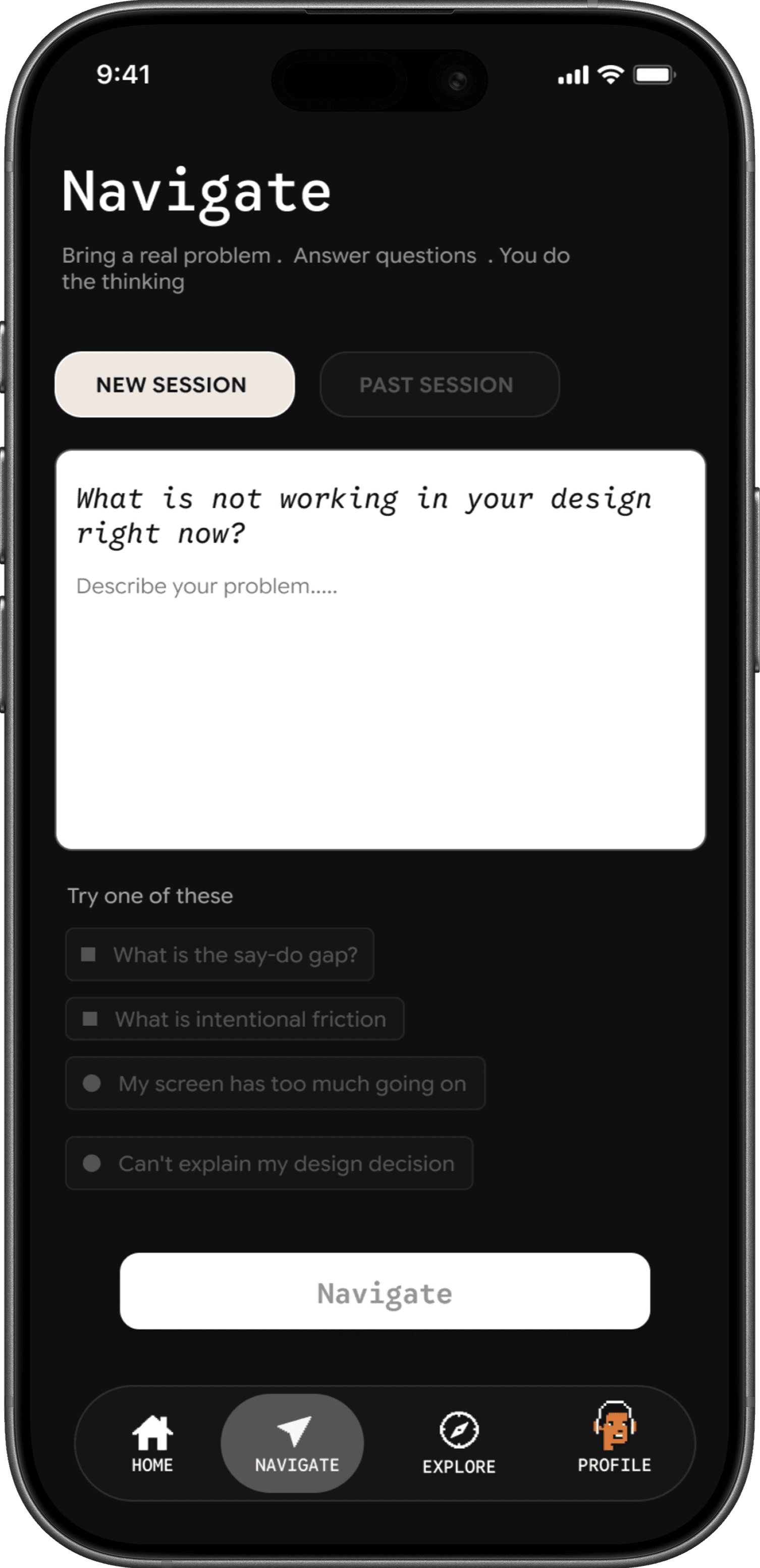
02 · NAVIGATE
Bring a live
problem in
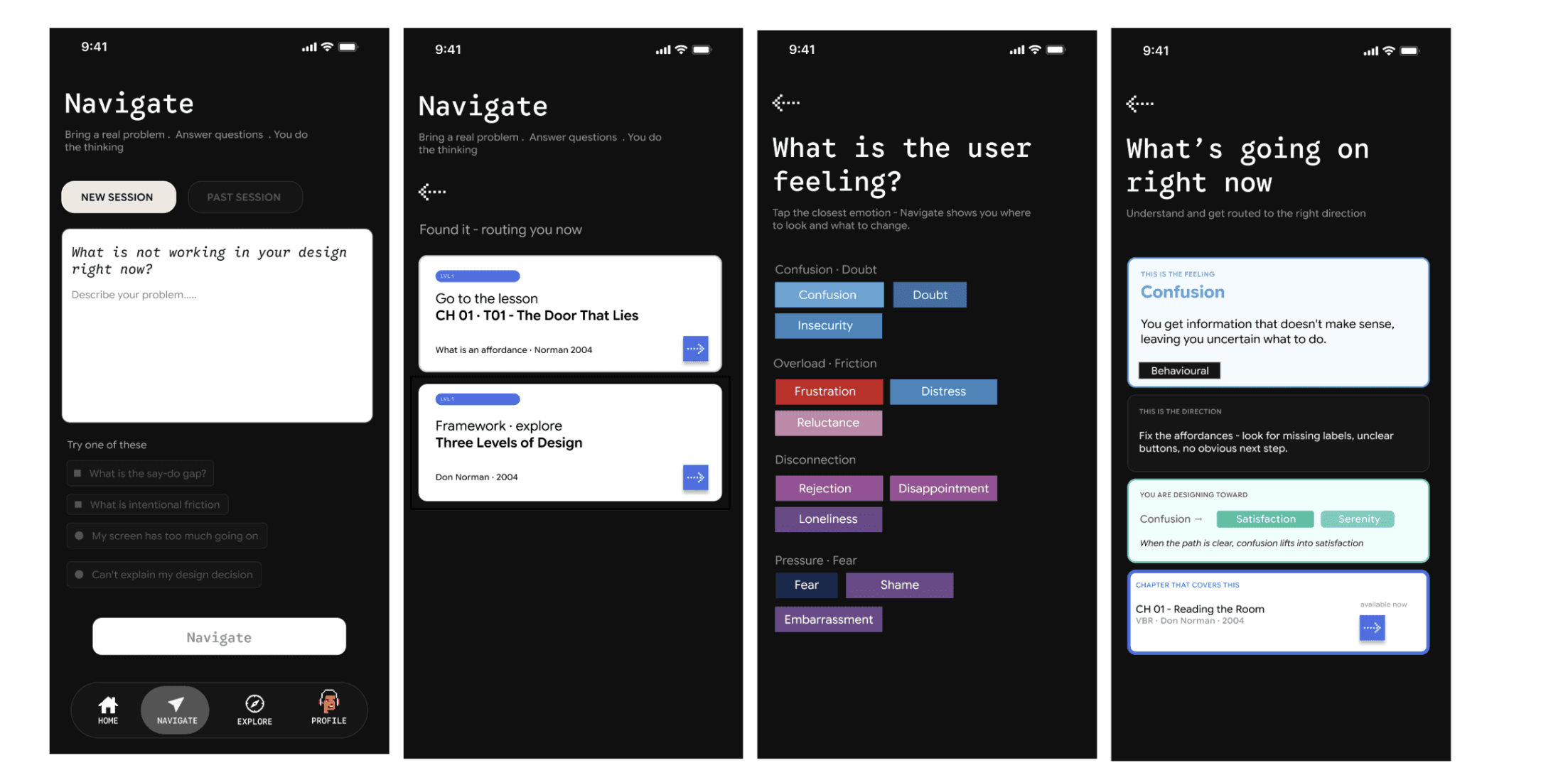
One input. Two paths. The session saves and waits tagged to the chapter that covers it, ready to revisit with more knowledge.
Path A - concept question → framework
Path B - real problem → TU Delft typology → direction
13 emotions · 4 families · positive target
03 · EXPLORE
The reference
layer
Every framework and article unlocking chapter by chapter. Depth without context is noise. Relevant at every stage.
Frameworks - the conceptual tools from every lesson
Articles - curated by chapter and emotional territory
Px quietly acknowledges every new unlock
A mobile app that teaches emotional UX as a practised language not content to memorise, but a skill built through feeling


Everyone starts at Level 01 by default
Not because the platform assumes you know nothing, but because Lost is not a beginner problem. It is a human one. The language starts here. The designer builds upward.
8
Designers Interviewed
Early- to mid-level designers. Qualitative approach: depth over breadth. The same five emotional states surfaced across every conversation.
5
Emotional States Found
Lost · Uncertain · Overwhelmed · Invisible · Performing. Not invented. Reported consistently and candidly across all eight interviews.
1
Consistant Gap
Emotional design is everywhere as a concept. Every designer interviewed described the same absence: not a lack of resources, but a lack of structure to practice with.

Build from pixel up
05 · The Product

THEY = Designers
$100
Returned for every $1 invested in UX
A 9,900% ROI. The commercial case for designers who can practice emotional UX is not a soft argument. It is a business one.
Nielsen Norman Group




Practice emotional UX the way you practice any language. Use it, forget it a little, come back, use it better.
Three Levels
One Journey
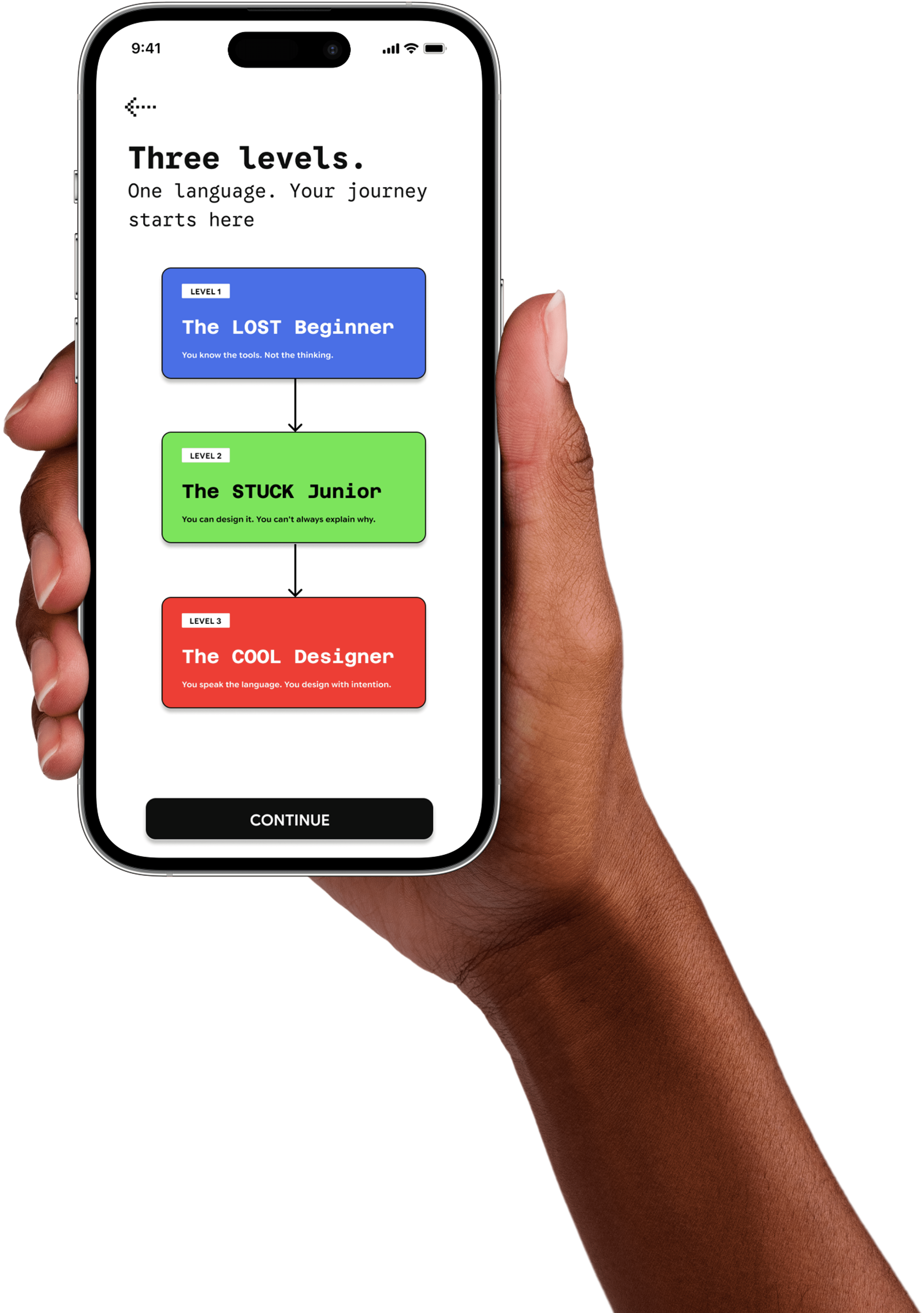


Every designer starts at Level 01
Not because we assume you know nothing but because Lost is not a beginner problem. It is a human one.
Once you can name which level a problem lives at, you know exactly where to look. and exactly where to fix it.

Three levels. Every design lives on V.B.R Key

UX CASE STUDY



The Lost
Beginner
Navigate
01
01
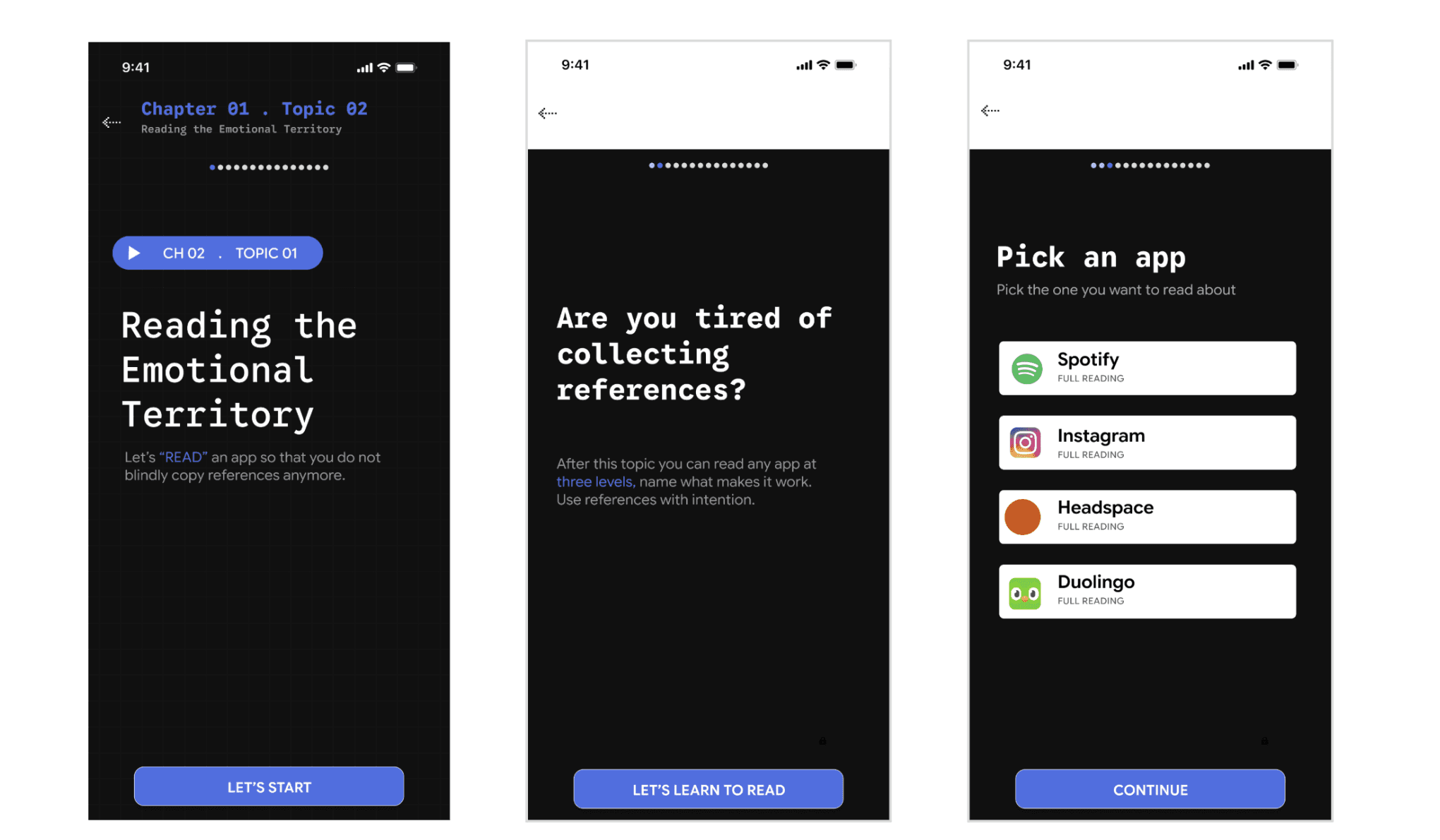
Every lesson follows this structure
Feeling before
framework
Chapter 2 Topic 1


One chapter.Three topics.
One emotional territory.
Every chapter in Level 01 follows the same structural logic. three topics, each building on the last. The lesson built above is the template. Every chapter from CH02 to CH05 follows it exactly.


The gap was structural
UXatlas is the structure
Claude as a
thinking partner
01 · Structural
A curriculum built around emotional states, not subjects
A model that starts where the designer actually is. Replicable beyond UXatlas to any design education context.
02 · Methodological
Navigate - a new kind of design tool
A diagnostic space where a designer brings a live problem and receives a direction grounded in academic emotional research.
03 · Visual Argument
A design language that carries its argument
RGB as the level system. Px as the companion. The medium and the message are the same thing.
Not for generating content. For structuring thinking, pressure-testing decisions, and building outputs faster


V1 uses keyword matching to route the designer to the right path. V2 replaces this with AI natural language processing; the system reads intent rather than matching strings. The concept-or-problem is the base to teach LLM

Where the frameworks from the lessons meet the real problems the designer is currently facing. One input. Two paths. The session saves and waits, tagged to the chapter that covers it, ready to revisit with more knowledge.

2 Paths · 30 Emotions · TU Delft
2 PATH input
V1 = Volume 1 (MVP)

Design with Intent.

Built on the
right shoulders
Built on the
right shoulders
30 emotions curated for UX design
Negative and positive. Routed in Navigate

